
In the north of Corsica, between the Gulf of Saint-Florent and the mouth of the Ostriconi, lies one of the last great wild spaces in the Mediterranean: the Agriates Desert. The name is intriguing, because there are no endless dunes or scorching sand here. This “desert” is in fact a vast expanse of Mediterranean maquis, arid hills and hidden coves that shelter some of the finest white-sand beaches on the island. Saleccia, Lotu, Ghignu: names that make lovers of unspoiled nature and turquoise water dream. The challenge is knowing how to reach them. By boat, on foot or along a 4×4 track — here is our complete guide to discovering this protected area.
The Agriates Desert, a wild gem of Haute-Corse
The Agriates Desert covers around 15,000 hectares of wild coastline and hinterland, in the Nebbio micro-region of Haute-Corse. It stretches over nearly 40 kilometres of coast, from the Gulf of Saint-Florent in the east to the Ostriconi valley in the west, which marks the gateway to the Balagne region. This arid landscape, dotted with maquis, pale rocks and heavenly beaches, has remained untouched by development: today it is a protected natural site owned by the Conservatoire du littoral (the French coastal protection agency), and its waters lie partly within the Cap Corse and Agriate Marine Nature Park.
Why call it a “desert”? The term does not refer to a lack of water, but to the almost total absence of permanent settlement. The word itself is thought to come from the area’s farming past. This now-uninhabited land was long cultivated: in the days when Genoa administered Corsica, the Agriates served as a granary, covered with fields of cereals and olive trees tended by the people of Cap Corse and the Nebbio, who crossed over for the harvest. The hamlets of Casta and Vezzu, the stone sheepfolds and the old shepherds’ huts still bear witness to this vanished rural life. Today, nature has reclaimed its rights: the maquis scents the air with myrtle, cistus, mastic and immortelle, and the site’s natural heritage makes it a true oasis for Mediterranean flora and fauna. For an overview of the area, its access points and surroundings, see our guide to the Agriates region.
The most beautiful beaches of the Agriates Desert
If the Agriates Desert draws so many visitors, it is above all for its beaches, among the most spectacular in Corsica. White sand, crystal-clear water, a totally pristine setting: they have to be earned, but the reward is well worth it.

Saleccia beach, the star of the Agriates
It is impossible to talk about the Agriates without starting with Saleccia. More than a kilometre long, bordered by a pine wood and a ribbon of dunes, this fine-sand beach unfurls a lagoon in shades of turquoise worthy of the Caribbean. Its isolation has preserved its wild character: no concrete, no paved road, just a few beach huts open in season. It is easy to see why it has served as a film set and regularly features among the most beautiful beaches in France.
👉 To find out everything about its access, its anchorage and its surroundings, see our dedicated guide: Saleccia Beach: the jewel of the Agriates.

Lotu beach, the most accessible
Neighbouring Saleccia, Lotu beach (or Loto) is the first you reach by boat from Saint-Florent. Smaller and more intimate, it opens onto the gulf and offers the same pale sand and clear water, with the Lotu lagoon — popular with birds — as a backdrop. It is the ideal starting point for reaching Saleccia on foot, on a pleasant walk of about an hour along the coast. Find all our tips on Lotu beach.
Ghignu beach and the secret coves
Further west, Ghignu beach rewards the most seasoned walkers. Wild and often deserted, it is famous for its old shepherds’ huts, stone shelters restored by the Conservatoire du littoral that you can rent for a night of bivouac facing the sea. Between Saleccia and Ghignu, other coves such as Malfalcu appear along the path, offering swimming stops far from the crowds. It is this succession of deserted beaches that makes the Agriates coastline so magical.
How to get to the Agriates Desert?
No road crosses the heart of the Agriates. To reach the beaches, three options are available, to be chosen according to your time, your budget and your taste for adventure.
By boat from Saint-Florent
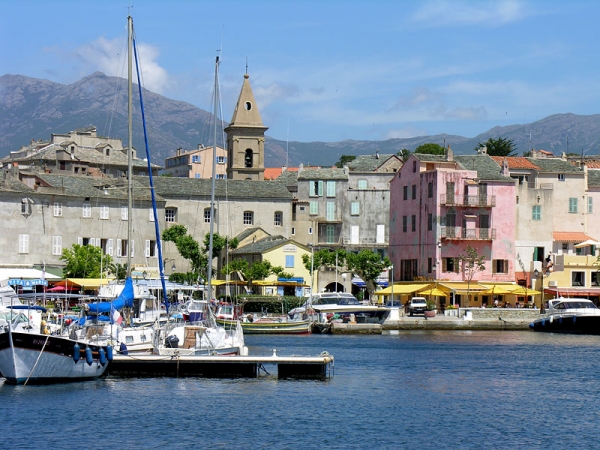
This is the simplest and quickest solution. Boat shuttles leave from the port of Saint-Florent and reach Lotu in about twenty minutes, then Saleccia a little further on. Crossing the Gulf of Saint-Florent is a pleasure in itself, with views of Cap Corse and the Nebbio. In high season, several rotations run during the day: ideal for enjoying the beaches without worrying about getting back. Remember to book and to check the timetables, as departures depend on the weather and the state of the sea.
On foot along the customs officers’ path
Hikers will prefer to reach the Agriates via the coastal path, the old customs officers’ path that runs along the entire shore. The route starts at Roya beach, on the edge of Saint-Florent, and winds through the maquis, between coves and rocky points, all the way to Saleccia. Allow several hours of walking for a good dozen kilometres, with no shade: it is best to set off early and carry plenty of water. For a shorter version, you can land by boat at Lotu and then walk to Saleccia in about an hour. It is the finest way to grasp the vastness and silence of this protected area.
By 4×4 or mountain bike along the Casta track
The last option, the most adventurous: the track that plunges into the Agriates from the hamlet of Casta, on the D81 road between Saint-Florent and the Ostriconi. A dozen kilometres of stony, sometimes exasperating track lead to Saleccia. The slow, bumpy journey absolutely requires an off-road vehicle with good ground clearance; it is not advised for ordinary cars or rentals, which are often prohibited on this type of terrain. Trained mountain bikers will enjoy the route, provided they carry enough water. Check the condition of the track before setting off, as it varies with the season.
Which access should you choose?
In short: the boat for an easy, quick beach day, walking the customs officers’ path for adventure and panoramas, the 4×4 track for well-prepared insiders. In every case, the Agriates Desert is not to be visited lightly: it has to be earned, and that is exactly what makes it so charming.
Hikes and activities in the Agriates
Beyond a simple beach day, the Agriates make a magnificent playground for hiking. The coastal path can be walked over several days, bivouacking in the Ghignu shelters — a unique experience, to be booked with the Conservatoire du littoral and undertaken in keeping with the site’s rules. Between stages, you cross dense maquis, follow deserted sandy beaches and encounter a wealth of Mediterranean flora.
Out at sea, the turquoise water lends itself to snorkelling and kayaking: paddling along the wild coast, you discover coves that cannot be reached on foot. At the western end, the Ostriconi valley offers one of the most photographed views in Corsica, with its beach framed by dunes and the mouth of the river winding through the maquis. It is also the natural boundary between the Agriates Desert and the Balagne region. Whether you come to walk, swim or simply gaze, this preserved natural heritage leaves a lasting impression.
When to visit the Agriates Desert? Our practical tips
The best time to discover the Agriates runs from May to June and in September. Temperatures are mild, the maquis is still in bloom in spring, and crowds remain reasonable. In the height of summer, the heat can be overwhelming and the total lack of shade makes hiking gruelling; if you come in July or August, favour the boat and the early hours.
A few recommendations for enjoying the site with complete peace of mind:
- Carry a large amount of water, a hat and sunscreen: there is neither a spring nor a shop along most of the coastline.
- Bring good walking shoes for the path and the access to the coves.
- Respect this protected area: take all your rubbish with you, pick nothing, and follow the guidelines of the Conservatoire du littoral and the Marine Nature Park.
- Check the marine weather forecast before any crossing or kayak outing.
What to do around the Agriates Desert?
The Agriates Desert fits perfectly into a stay in northern Corsica. To the east, the charming harbour of Saint-Florent, nicknamed the “Corsican Saint-Tropez”, deserves a stop for its lanes, its citadel and its convivial atmosphere. Right next door, the Patrimonio vineyards produce some of the finest wines on the island, to be enjoyed on the way back from the beach.
Further north, the Cap Corse peninsula unrolls its perched villages and panoramic roads. And to the west, once past the Ostriconi valley, the Balagne opens up, with its craft villages and the seaside resort of L’Île-Rousse. Everything you need to build a rich itinerary, between wild nature, heritage and Corsican art of living.
In summary
The Agriates Desert is far more than a simple seaside destination: it is an immersion in an unspoiled Corsica, where the maquis meets fine-sand beaches bathed in turquoise water. Whether you choose the ease of the boat, the effort of the customs officers’ path or the adventure of the track, Saleccia, Lotu and Ghignu will give you unforgettable memories. Take your time, respect the place, and let yourself be carried away by the raw beauty of this unique site.
Want to take your discovery further? Find all our tips, access and good addresses in our complete guide: Explore the entire Agriates region.