
Corsican cheeses are a true part of the island’s gastronomic heritage, showcasing the excellence of an unspoilt terroir and age-old expertise. From the famous brocciu to ewe’s milk tommes matured in mountain sheepfolds, not forgetting the enigmatic casgiu merzu, the Isle of Beauty offers an exceptionally rich variety of cheeses.
This thousand-year-old cheesemaking tradition is rooted in Corsican pastoral culture, where flocks roam freely between fragrant scrubland and high mountain pastures. Each cheese tells the story of its terroir, from the valleys of Venaco to the heights of Niolo, creating unique flavours that cannot be reproduced anywhere else. Discovering these dairy treasures means immersing yourself in the authentic soul of Corsica and understanding why the island fascinates lovers of traditional gastronomy.
Corsican cheesemaking: a thousand-year-old heritage
For centuries, the Isle of Beauty has preserved an exceptional cheesemaking tradition shaped by the pastoral history of its people. This ancient heritage is rooted in the practices of Corsican shepherds, who turned geographical constraints into strengths to create cheeses unlike any others in the world.
Traditional livestock farming in Corsica: between mountains and scrubland
Sheep farming in Corsica thrives in an unspoilt natural environment where flocks roam freely between altitudes of 2,000 metres and the coast. This traditional transhumance, practised since Antiquity, allows the sheep to graze in the Niolo pastures in summer before descending towards the Sartène plains in winter.
Corsican shepherds have developed age-old flock-management techniques adapted to steep terrain and the Mediterranean climate. These respectful methods ensure animal welfare while preserving the exceptional biodiversity of the Corsican scrubland, which is rich in wild aromatic plants.
Corsican ewe’s milk: distinctive features and exceptional qualities
The ewe’s milk produced on the island is of remarkable quality, directly linked to the floral diversity of the Corsican terroir. The animals naturally feed on immortelle, myrtle, wild thyme and strawberry tree, giving the milk subtle and complex aromas.
This natural diet, combined with expertise passed down from generation to generation, makes it possible to produce exceptional traditional cheeses. In villages such as Venaco, master cheesemakers continue these ancient practices, transforming this precious milk into genuine gastronomic treasures that have earned Corsica an international reputation.
Brocciu: an emblem of Corsican gastronomy
A true national cheese of Corsica, brocciu embodies the authentic soul of the Isle of Beauty. This unique cheese speciality showcases all the ancestral expertise of Corsican shepherds and is a must-try for every traveller seeking culinary authenticity.
Traditional production of Corsica’s national cheese
Brocciu is made using traditional techniques passed down from generation to generation. Producers use ewe’s or goat’s whey, heated to a precise temperature of 80°C. Whole milk is then delicately added, allowing the characteristic white curds to form.
This artisanal method, overseen by ODARC (Corsica’s Office for Agricultural and Rural Development), guarantees the product’s authenticity. The process requires specific expertise:
- Rigorous selection of high-quality milk
- Strict control of heating temperatures
- Careful draining in wicker baskets
- Controlled maturation according to the desired texture
Brocciu seasonality and protected designations
Since 1998, brocciu has held an Appellation d’Origine Contrôlée (AOC), followed by European PDO status in 2003. This recognition protects an exceptional gastronomic heritage produced exclusively between November and June, the natural lactation period of the herds.
In cooking, brocciu can be enjoyed in many forms. Fresh, it pairs perfectly with Corsican vegetables or fills omelettes. Matured, it enhances pasta dishes and reaches its finest expression in the famous fiadone, the island’s emblematic dessert. Corsican chefs also use it in brocciu cannelloni, fritters and savoury tarts, offering visitors a genuinely island-inspired range of flavours.
Corsican ewe’s milk cheeses: diversity and character
The Isle of Beauty reveals the full richness of its gastronomy through its ewe’s milk cheeses, true ambassadors of the island’s terroir. These dairy treasures reflect the diversity of Corsican landscapes and the centuries-old expertise of its shepherd-cheesemakers, offering visitors an exceptional range of flavours.
Ewe’s milk tomme: regional variations and terroirs
Each region of Corsica has developed its own interpretation of ewe’s milk tomme, creating a mosaic of unique flavours. The famous Niolo, from the high valleys of central Corsica, has a soft paste with a natural rind and reveals powerful woodland aromas. In the mountains around Venaco, cheesemakers continue ancestral techniques to produce tommes with a pronounced character.
Production areas extend from Calenzana in the north to Sartène in the south, with each terroir contributing its own climatic and botanical characteristics. In Bastelica, altitude and summer pastures lend the cheeses particular finesse, while the coastal plains produce milder, creamier varieties.
This diversity can also be seen in the different sizes:
- Small tommes weighing 200 to 500 grams for quick consumption
- Medium-sized cheeses, ideal for short maturation
- Large wheels intended to become true long-aged cheeses
Maturation techniques and traditional storage
Corsican cheeses are matured using methods passed down from generation to generation. Natural caves carved into the rock and traditional sheepfolds provide ideal temperature and humidity conditions. Cheesemakers regularly turn their cheeses, brush them gently and monitor the development of their rinds.
They are stored in cool, well-ventilated environments, allowing the cheeses to develop their aromatic complexity over several months. This patience rewards cheese lovers with incomparable flavours: a true concentration of the Corsican soul.
Casgiu merzu: Corsica’s maggot cheese
Casgiu merzu is one of Corsica’s boldest cheese specialities, challenging culinary conventions with its unique production process. This maggot cheese shares its origins with Sardinia’s famous casu marzu, bearing witness to an ancient Mediterranean tradition in which fermentation has been elevated to a remarkable level of expertise.
How casgiu merzu is made: the process and Piophila casei larvae
Casgiu merzu begins with a traditional ewe’s milk cheese, generally aged brocciu. Fermentation starts when Piophila casei flies lay their eggs in the cheese rind. The fly larvae hatch and feed on the paste, creating enzymatic digestion that radically changes the texture and flavour.
The larvae burrow through the cheese, naturally aerating it and enabling a distinctive anaerobic fermentation. This biotransformation may last several months, during which the cheese develops an intense flavour and its characteristic creamy consistency. Monitoring the process requires expertise passed down from generation to generation.
Cultural tradition and consumption of the ‘rotten’ cheese
In Corsica, casgiu merzu is more than simply a food: it has become a powerful cultural symbol. Corsican shepherds regard this ‘rotten’ cheese as a delicacy, traditionally eaten with bread and local red wine.
Tasting follows precise customs: some people remove the larvae, while others eat them, believing they add another dimension of flavour. This practice perfectly illustrates the Corsican philosophy that ‘nothing goes to waste’, in which every natural element is put to use. Casgiu merzu belongs to an authentic terroir tradition and reflects the ingenuity of rural communities faced with the challenges of food preservation.
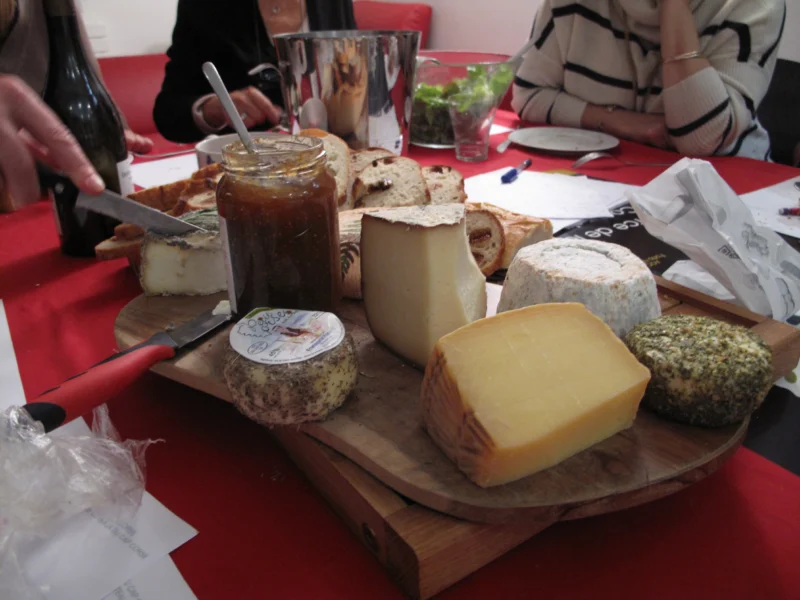
Tasting and pairings: the art of enjoying Corsican cheeses
Tasting and preparation techniques
Corsican cheeses reveal their full richness when a few essential rules are followed. Remove them from the refrigerator at least one hour before tasting so that their aromas can fully develop. First observe the rind and the texture of the paste, then smell them gently to detect the characteristic notes of the Corsican scrubland.
To appreciate each Corsican speciality, begin with the mildest cheeses, such as fresh brocciu, then move on to more mature varieties. Toasted bread is the ideal accompaniment, its crisp texture contrasting harmoniously with the creaminess of the cheese. Add a few fresh walnuts, fig jam or chestnut honey to enhance the flavours.
Hikers on the GR20 often discover these delights during stops at sheepfolds, where shepherds generously share their artisanal products. This authentic experience greatly deepens their understanding of the island’s terroirs.
Food and wine pairings with Corsican specialities
Corsican wines naturally complement the island’s cheeses. A white Patrimonio pairs perfectly with brocciu, while a red from Sartène brings out the full strength of a mature ewe’s milk tomme. Native grape varieties such as nielluccio and vermentino create exceptional harmonies.
At A Fiera di U Casgiu, Venaco‘s famous cheese fair, producers offer guided tastings that reveal these subtle pairings. This spring event is an unmissable opportunity to understand the diversity of Corsican cheesemaking.
For a successful cheese board, combine dried figs, artisanal preserves and Corsican cured meats. These traditional accompaniments create a balanced tasting experience that honours the ancestral expertise of Corsican producers.
Where to discover and buy authentic Corsican cheeses
Farm producers and traditional cheesemakers
The best way to discover authentic Corsican cheeses is to meet farm producers directly. In the Niolo valley, birthplace of the legendary brocciu, several farmers welcome visitors and share their ancestral expertise. The sheepfolds of Calasima and Casamaccioli offer tastings where every farmhouse cheese tells the story of its terroir.
In Venaco, in the heart of Corsica, the Ottavi dairy has maintained the tradition of venachese, a soft ewe’s milk cheese, for four generations. This essential stop allows visitors to observe the production process and buy directly from the artisans.
ODARC (Corsica’s Office for Agricultural and Rural Development) lists certified farm producers on its website, guaranteeing the authenticity of the cheeses offered. This valuable resource guides enthusiasts towards farms that respect traditional methods.
The Route des Sens Authentiques is a remarkable tourist trail linking the island’s main artisanal dairies. This themed route offers complete immersion in the world of Corsican cheese, from the sheepfold to the plate.
Cheese events: A Fiera di U Casgiu and local markets
Every spring, A Fiera di U Casgiu in Venaco brings together the island’s best producers for a fair devoted exclusively to Corsican cheeses. This major event offers a unique opportunity to taste and buy directly from farmers while discovering new cheese creations.
The weekly markets in Ajaccio, Bastia and Corte are ideal places to buy authentic farmhouse cheeses. These friendly gatherings provide an opportunity to talk with producers about their farming methods and the distinctive qualities of their cheeses.
Frequently asked questions
What makes Corsican ewe’s milk so special?
Corsican ewe’s milk owes its exceptional quality to the island’s unique terroir. The sheep graze freely in the fragrant scrubland, feeding on wild plants including thyme, rosemary and immortelle. This natural diet, combined with the Mediterranean climate and traditional pastoral practices, gives the milk complex aromas and outstanding nutritional richness, making it the basis of exceptional cheeses.
Is casgiu merzu dangerous to health?
Casgiu merzu does not present major health risks when produced using traditional methods and consumed fresh. The live Piophila casei maggots contribute to maturation and are generally removed before tasting. However, this cheese is not recommended for immunocompromised people or pregnant women. Its artisanal production provides quality control in keeping with ancestral traditions.
What is the difference between fresh and dried brocciu?
Fresh brocciu is eaten within 48 hours of production and has a creamy texture and delicate taste. Its season runs from November to June. Dried brocciu is matured for several months, developing a natural rind and stronger flavours. Dried brocciu can be kept and enjoyed all year round, whereas the fresh variety must be consumed quickly.
How should traditional Corsican cheeses be stored?
Corsican cheeses should be kept at a stable temperature of between 8 and 12°C with controlled humidity. Wrap them in cheese paper or a damp cloth, never in plastic. Maturation continues naturally: young cheeses evolve in a cellar, while soft cheeses such as fresh brocciu should be eaten quickly. Respecting traditional conditions preserves their sensory qualities.
Where can you taste casgiu merzu in Corsica?
Casgiu merzu is mainly tasted at traditional farm producers who guarantee its authenticity. Sheepfolds in Niolo and certain dairies in Venaco offer this speciality depending on the season. Contact farmers directly or ask at local markets. Advance booking is often required for this unique experience, as casgiu merzu is produced in limited quantities using ancestral methods.
Corsican cheeses: ambassadors of an exceptional terroir
Corsican cheeses go beyond simple tasting to offer a genuine encounter with the island’s identity. From emblematic brocciu and strongly flavoured ewe’s milk cheeses to the daring casgiu merzu, every speciality reveals the richness of a cheesemaking heritage unique in the Mediterranean. These dairy treasures perfectly embody the Corsican soul, combining centuries-old pastoral tradition with culinary innovation.
No trip to Corsica would be complete without this authentic exploration of its cheeses. Meet the farm producers, savour their exceptional creations and allow yourself to be won over by flavours that only the Isle of Beauty can offer. An unforgettable tasting experience awaits in every traditional sheepfold.